
Ethics Corner
This is an online resource for ethical questions and answers as they relate to fundraising and planned giving. The NCGPC posts real questions from real people and Doug White answers them. All identities, both of people and places, are kept confidential.
Are Their Gift Intentions Real?
Submitted February 4, 2026
The views expressed in this column are solely those of the author, and do not necessarily reflect the views of NCGPC.
Q. The members of our gift planning team are increasingly discussing suspicions of dementia and Alzheimer’s among some of our prospects. The Baby Boomer generation is now full force in our society, and I have to think the problem of not really knowing if someone wants to support our charity is growing. Is there a way to be sure that someone is not non compos mentis? That someone indeed does have the ability to commit irrevocably to making a gift, the structure and terms of which are often quite complicated?
A. You are not a medical doctor or a psychiatrist (and if you are, you are not acting in that capacity as a gift planner), and so the short answer to your question of whether you are able to be sure if someone has the mental capacity to make important gift decisions is no.
In its latest report, “2025 Alzheimer’s Disease Facts And Figures,” the Alzheimer’s Association says, “Millions of Americans are living with Alzheimer’s or other dementias. As the size of the U.S. population age 65 and older continues to grow, so too will the number and proportion of Americans with Alzheimer’s or other dementias.” Of the total U.S. population 65 and older, about 1 in 9 people (11%) has Alzheimer’s. For those aged 65 to 74 , the percentage is 5.1%; for those 85 and older, the percentage jumps to 33.4%. The report also notes that people younger than 65 can also develop Alzheimer's. (The link to the 150-page report, freely available, can be found here.)
One in nine – for the age group of those most likely to make a planned gift. Clearly, the likelihood of interacting with elderly, charitably minded individuals with cognitive deterioration is not insignificant. Furthermore, physical or oral signs of mental decline are not always evident, at least to those not in the medical field.
One way to help address the issue is to ensure that the prospect’s family members, particularly children, or professional advisors are knowledgeable of your intentions, and, if possible, are present when a gift is discussed and an agreement is signed. You might put in place a policy on this point; for all prospects over 70, for example. Any gift of substance could be called into question by the donor’s heirs; heirs who might want to take their case to court. The more eyes on the transaction, the better.
Also, as the discussion gets closer to a gift agreement, you might want to have another person from your office present. Taking detailed notes of the conversations – and any concerns, even if they are vague to you at the time – and making sure they are preserved will ensure that others in your office know that you have understood things as accurately and fully as possible.
Even if you feel you are on solid ground, however, you don’t want to end up in court. By the time a legal battle arrives, your charity has lost at least some of its goodwill. Yes, there are times when going to court is the right thing to do – despite even the noblest intentions, there are no guarantees – but legal action always comes at a cost.
So, yes, there are precautions you should take, and there are likely others that those in your group, as well as your legal counsel, might recommend. You have a difficult job, a balancing act really: you are trying to extract money and assets from someone whose family members might want for themselves someday, and whose advisors have a duty to preserve the value of the client’s assets. Those of us in planned giving — and in advancement work more broadly — are called to approach conversations about charitable intent with care, integrity, and respect for individual well-being, recognizing that there are times when making a gift may not be in a person’s best interest.
The financial realities of running a charity mean that we must keep vigilant and so must continue to raise money. But a charity is not only a business. If we are truly sincere about making the world a better place, we have to first look inward to our moral selves – individually as well as institutionally. The efforts we undertake to ensure that a donor’s gift intentions are real constitute that first step.
If you have a question, please feel free to contact Doug White at [email protected]. While all issues discussed are real, identities are kept confidential.
Doug's Bio
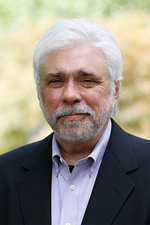 Doug White, a long-time leader and scholar in the nation's philanthropic community, is an author and an advisor to nonprofit organizations and philanthropists. He serves as the Co-Chair of the Walter Cronkite Committee at FoolProof, and as a board member of the Secular Coalition of America. He is the former Director of Columbia University's Master of Science in Fundraising Management program, where he also taught board governance, ethics and fundraising. Prior to that, he was a lecturer at and the academic director of New York University's Heyman Center for Philanthropy and Fundraising.
Doug has published five books. His most recent, "Wounded Charity" (Paragon House, 2019), analyzes the allegations of mismanagement made in January 2016 against Wounded Warrior Project. Kate Bahen, the managing director of Charity Intelligence Canada, wrote, "An epic whodunnit. A sweeping sector perspective. A gripping read for everyone interested in the charity sector. The facts behind the news headlines leaves one reeling. How could this happen? Using the dramatic case of Wounded Warrior Project, Doug White addresses the key forces shaping today's charity sector. From his unique perch, he generously shares his insights and those of the sector's thought leaders. Doug White's books should be required reading for charity directors, journalists, staff and donors alike."
Why Should You Read Ethics Corner posts?
The primary objective is to establish and grow an ethics-based dialogue about important issues facing gift planners and other fundraisers at charities today.
Doug, a teacher of ethics and philanthropy at Columbia University, states that, "Based on the queries I receive, it is clear that those who have worked in this field, even those who have served charities for many years, have too few places to go to discuss issues that are not covered by legislation or the IRS. This site is meant to address that need."
Comments
As ethical decision-making is more of a journey than a destination, we encourage readers' comments. Post your thoughts and reactions to our Linkedin Page.
Submit a Question
We encourage readers to submit a question to Doug at [email protected].

